
A bit of history…
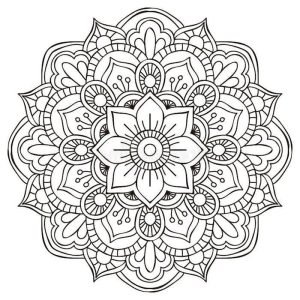
The word ‘mandala’ comes from India – in Sanskrit, the ancient language of Hinduism and Buddhism, it means ‘sacred circle’. These circular, colourful designs are centred around a focal point representing the universe. A mandala is a symbolic and aesthetic form used in meditation, contemplation and the quest for spiritual balance. It symbolises the harmony and balance of the universe and serves as a tool for achieving peace of mind.
A universal dimension…
These geometric figures are found beyond the borders of Asia. The mandala finds an echo in African culture in the form of the solar circle. In Africa, the circle is often used to represent the sun, a vital and powerful element at the heart of many cultural beliefs and practices. The African sun circle can be seen as a form of mandala, symbolising unity, wholeness and the cycle of life, which reflects the natural order of the universe. In Western churches, stained-glass windows depict sacred scenes or scenes from everyday life.
For Cistercian monks, these stained-glass windows, resembling luminous mandalas, serve as a medium for contemplation. Among the indigenous peoples of the Americas, the mandala is a window onto the spiritual world. It can convey messages from the spirits or illustrate visions. In shamanic traditions, mandalas incorporate symbols of natural cycles, totem animals and earth spirits. In Australia, the Aboriginal people use the mandala to express the forces of nature and the world of the ancestors – according to them, it is the ancestors who dream our existence, and our reality is but an illusion.
A therapeutic power…
It was the Swiss psychiatrist and psychoanalyst Carl Gustav Jung who introduced the mandala to the West. He noticed that his patients often drew these abstract circular figures of their own accord. He thus used the therapeutic power of the mandala to help his patients regain balance, peace and coherence. He regarded the mandala as the emblem of personal identity. When an individual colours or creates a mandala, they express their emotions and personal experiences, bringing to life a work that reflects their inner world. The practice of colouring or creating a mandala helps to come to terms with one’s inner shadows and fears. It is a vehicle for inner harmony and serenity. It is a path to concentration and, at times, it can reveal a humanitarian or artistic calling. 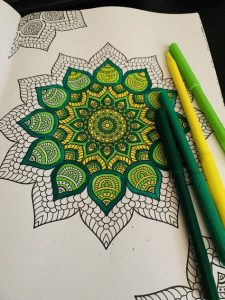
The Language of Colours...
The choice of colours symbolises different virtues:
- White: purity and emancipation
- Yellow: humility and renunciation
- Red: luck and passion
- Blue: healing and wisdom
- Green: balance and harmony
- Black: shadow and ignorance
The beneficial effects…
Results from practising mandalas vary from person to person, but the main benefits are as follows:
- Helps to focus the mind
- Brings tranquillity and inner peace
- Helps to calm the flow of thoughts
- Stimulates creative expression
- Supports children’s education in colours and drawing
- Encourages mindfulness
Would you like to explore the art of the Mandala?
Join me for a workshop on 6 March 2024 in Dubai. You’ll be able to create, colour and find your own path to balance and serenity.