
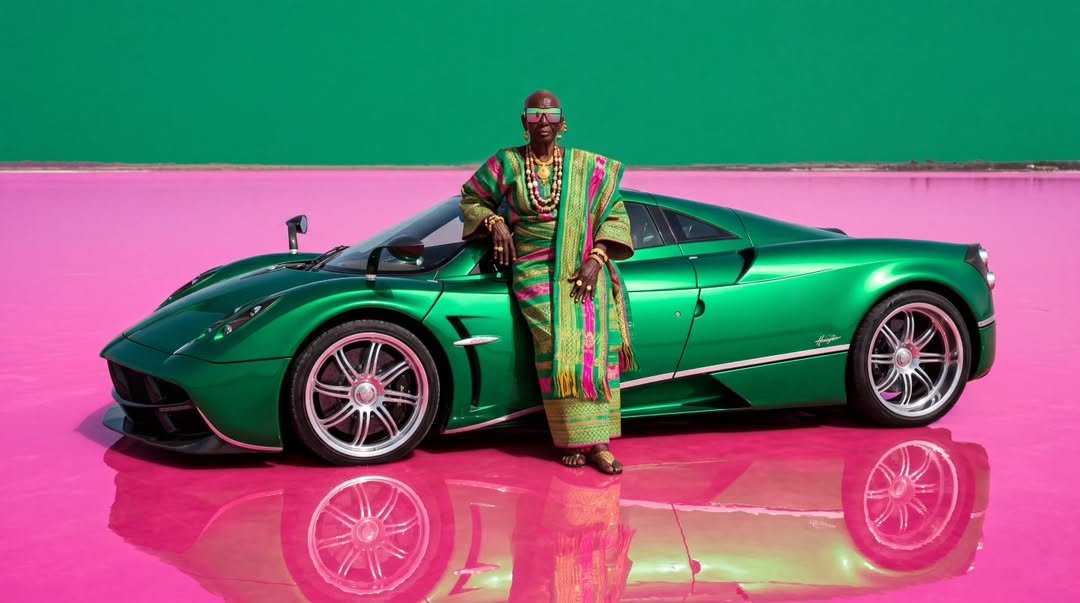
The advent of artificial intelligence in the art world has opened up previously unimaginable possibilities, transforming not only the way artworks are created, but also the way they are perceived, sold and even collected. Contemporary African art, with its rich diversity and history, is not being left behind in this digital revolution. It is important to note that there are both positive and negative aspects. Faced with this inevitable technological advance, it is essential to engage with it and come to terms with it, whilst maintaining a stance of control and vigilance.
The benefits……
A tool that transforms the authentication, valuation and marketing of contemporary African art
In the art market, AI is revolutionising the way in which contemporary African artworks are authenticated, valued and sold. AI-based technologies can analyse a work’s characteristics to verify its authenticity or estimate its value. Furthermore, certain platforms such as Artnet use artificial intelligence to provide insights into current online market trends. This helps collectors and galleries make better buying and selling decisions.
A virtual tool as an assistant
Virtual tools specialising in various artistic fields assist artists at every stage of their creative process. They can, for example: - Suggest colour palettes, compositions or techniques that match their tastes; - Offer advice on improving their work, make comparisons with other works or provide feedback on aesthetics. There are also tools capable of converting a work from one medium to another, such as transforming a painting into music or a poem into a sculpture.
A tool that is revolutionising artistic creativity
Artificial intelligence can be a valuable tool for artists seeking new ideas, thanks to its ability to explore and analyse vast databases on art history. Thus, AI algorithms are capable of identifying previously unseen links and patterns, offering artists unexpected sources of inspiration to create innovative works.
……..And limitations
Art and AI: Between Imitation and the Loss of Human Essence
Art is an essential manifestation of human experience and life stories, a channel through which people seek to grasp, explore and depict their environment. By entrusting artistic creation to artificial intelligence, we run the risk of losing the essence that gives art its intensity and meaning.
AI can certainly imitate artistic styles and motifs, but it lacks lived experience, emotions and self-awareness.
Throughout history, through painting, sculpture, music, dance and many other forms, people have expressed what they feel, think, hope for and dream of. Art is about much more than simply being able to do something well; it touches directly on who we are and what we feel. It is a way of sharing our emotions, of better understanding the world and ourselves, and of feeling connected to one another. However, despite its ability to generate technically remarkable works of art, AI is fundamentally devoid of these deeply human attributes.
It is incapable of feeling, of having experiences, of experiencing fear, joy, pain or aspirations. It possesses neither self-awareness nor understanding. AI produces art by analysing data and mimicking the patterns it detects, without grasping the meaning or the emotion underlying those patterns. It is ironic that, although art is an expression of our humanity, AI-generated art—a human creation—is essentially devoid of that very humanity.
Art and AI: The Challenge of Valuing Human Talent and Learning
Art requires specific talents and a deep understanding of artistic methods, which are acquired after years of practising and experimenting. Artists devote a great deal of time to perfecting their craft, learning about art history, mastering various techniques and developing their own unique style. When AI manages to mimic these methods without undergoing those long years of learning, this risks diminishing the value placed on these skills, leading to artistic work being undervalued or underestimated. Furthermore, it could impact art education, with fewer people motivated to acquire these skills if a machine can easily simulate them.
AI and the Copyright Dilemma: Between Copying and Human Creativity
Artificial intelligence is limited to reproducing what already exists, in line with its operating principle. It takes works available on the internet and merges them according to the user’s instructions. In doing so, it infringes the copyright of the creators. Indeed, the use of images created by an artist requires their consent, which AI does not seek. It simply uses people’s creativity without permission, thereby raising questions of ethics and legality. Plagiarism, being illegal, poses a serious problem. Nevertheless, it is possible to ask AI to specifically imitate an artist’s style.
©photo Malik Afegbua