Dance as a legacy…
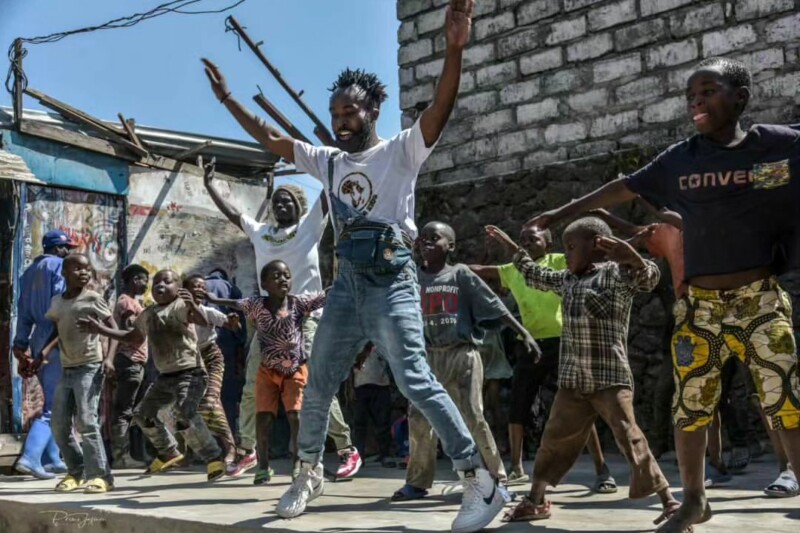
Lukah Katangila is a Congolese artist based in Brussels, specialising in dance, choreography, performance and activism! Through his work, he aims to bring people together, share dance styles from diverse cultures, and promote unity across Africa – from East to Central, South to North – as well as in Europe. His passion for dance was inherited from a line of artists, dating back to his grandfather, King Katangila, an elephant hunter and king of the village of Ufamandu.
From the age of six, he was introduced to dance, a passion that was welcomed by those around him, despite a few sceptics. His dance training began with the Mboka traditional dance troupe, founded by his grandfather. This experience was fundamental and continues to inspire his work. Lukah subsequently joined the Academy of Fine Arts in Brussels, where he studied art and choreography. He had the opportunity to collaborate with internationally renowned choreographers such as Wesley Ruzibiza and Louise Vanneste, as well as to dance for various companies in Africa and Europe.
For him, dance is a source of peace, joy and freedom. It allows him to fight against injustice and convey powerful messages. It acts as a bridge between worlds in conflict and gives a voice to those who have none, whilst connecting him to his ancestors.
Dance as a commitment…
Lukah’s commitment to the Democratic Republic of the Congo focuses on East Kivu, his hometown of Goma, often referred to as the ‘red zone’ due to political conflicts and the forced recruitment of children into the army. Despite the country’s natural resources, the population suffers from a lack of access to education, healthcare, clean water and electricity. The tragedy of the Congolese genocide has persisted for years. The main cause of this catastrophe is the theft of Congolese resources by neighbouring nations, particularly Rwanda and Uganda, with the support of major international corporations and certain Western countries. Furthermore, a significant share of the responsibility lies with the Congolese government itself, due to its failure to manage this crisis effectively.
Lukah founded the Ndoto Goma Kids association, which helps children affected by war, child soldiers and those living on the streets. Ndoto means ‘dream’. Supported by partners, they offer scholarships to these children who are completely destitute and abandoned by everyone. As artistic director of Mboka Dance Cie, he continues to collaborate with other activist artists to make their voices and those of their community heard. His dream is to create a space for young Congolese people with a passion for the arts, where they can express themselves through dance, drawing, poetry and writing.