
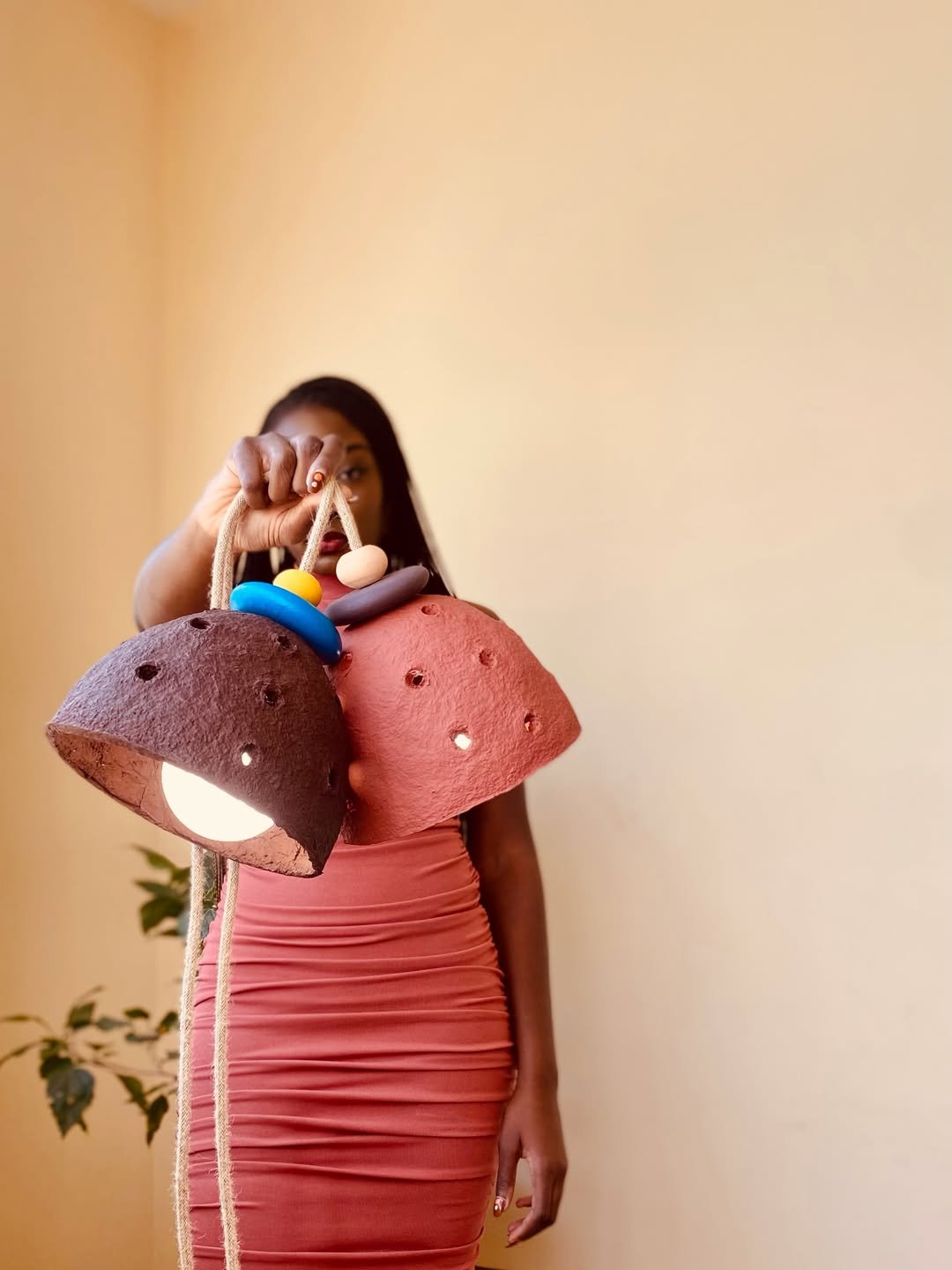
Could you tell us a bit about yourself?
My name is Saran Keita, and I’m the founder of Kalifa, an interior design brand offering handmade products made from recycled materials. I started creating my first pieces in 2020 during lockdown. As I’ve always been quite crafty, I was looking for a way to pass the time, and it was through my various searches that I came across papier-mâché. I carried out several tests until I got the technique right and gradually discovered the material’s potential; so I decided to create my own pieces.
Can you tell us about the inspiration behind the creation of your eco-friendly interior design brand?
Kalifa is a brand that aims to be eco-friendly and environmentally conscious. When we talk about interior design here in Senegal, people mainly turn to the big retailers that offer products made outside the country—often in China or India—manufactured in huge quantities using processes and materials that pollute, and we all end up with the same furniture or the same decorative accessories in our homes. I find that a great shame because we have very talented artisans in our country and a wealth of expertise that deserves to be showcased. So, in my own small way, I aim to contribute to promoting artisanal craftsmanship.
How do you select the recycled materials you use for your creations?
I work mainly with newspaper, egg cartons and old magazines; the key thing for me is that they become soft when they come into contact with water. I often ask friends to collect paper from their homes for me to recycle. For some lamps, I use plastic pots, and in those cases too, I either reuse my empty paint pots or collect materials here and there.
What challenges do you face in designing products that are both aesthetically pleasing and eco-friendly?
I don’t necessarily face any challenges when designing my pieces. Often, the most difficult thing to work with is the material itself, because it often warps as it dries. In that case, a few adjustments need to be made.
Can you give us an example of a product you’re particularly proud of and explain the creative process behind it?
The product I’m most proud of is the ‘Impertinent’ lamp; it’s my first light sculpture. It’s a tribute to women; I wanted to symbolise the female body with its imperfections. It also represents the modern woman, the strong woman, the woman with an unconventional personality and firm convictions.
How does your brand help raise public awareness of the importance of recycling and sustainability in the interior design sector?
On a daily basis, through my Stories, I try to show that it’s always possible to give a second life to the objects around us. I very often show my paper pulp-making process. The cutting stage, the stage where I soak the paper in water, the stage where I pound the paper so I can work with it – in short, all the stages I go through to transform a material that was destined for the bin into a material that has been given a new lease of life.
What does your brand name mean? How do you see eco-friendly interior design evolving in the coming years?
Kalifa means ‘heritage’ in Mandinka. It’s a little nod to my Bambara roots. I’m delighted to see that more and more people are becoming aware of the importance of buying local first, and also of having a home that’s healthy and reflects who we are. Since COVID, people have realised that having a home where you feel at ease is essential. Hence the importance of truly choosing the objects that surround us with care. I think interior design still has a bright future ahead of it.
What advice would you give to someone who wants to make their home more sustainable?
I think that to create a sustainable home, we need to prioritise local products. By buying locally made items, we pollute less because we spend very little on transport and we support local craftspeople. It’s also worth taking the time to think about how you’d like your home to look, so you can avoid impulse buys you might regret later. Focus on timeless pieces and be careful not to give in to trends that can quickly become outdated.
Finally, where can our readers discover and buy your creations?
You can message me directly on WhatsApp, on social media—particularly Instagram—and, for those in Dubai, via Art Kelen!