
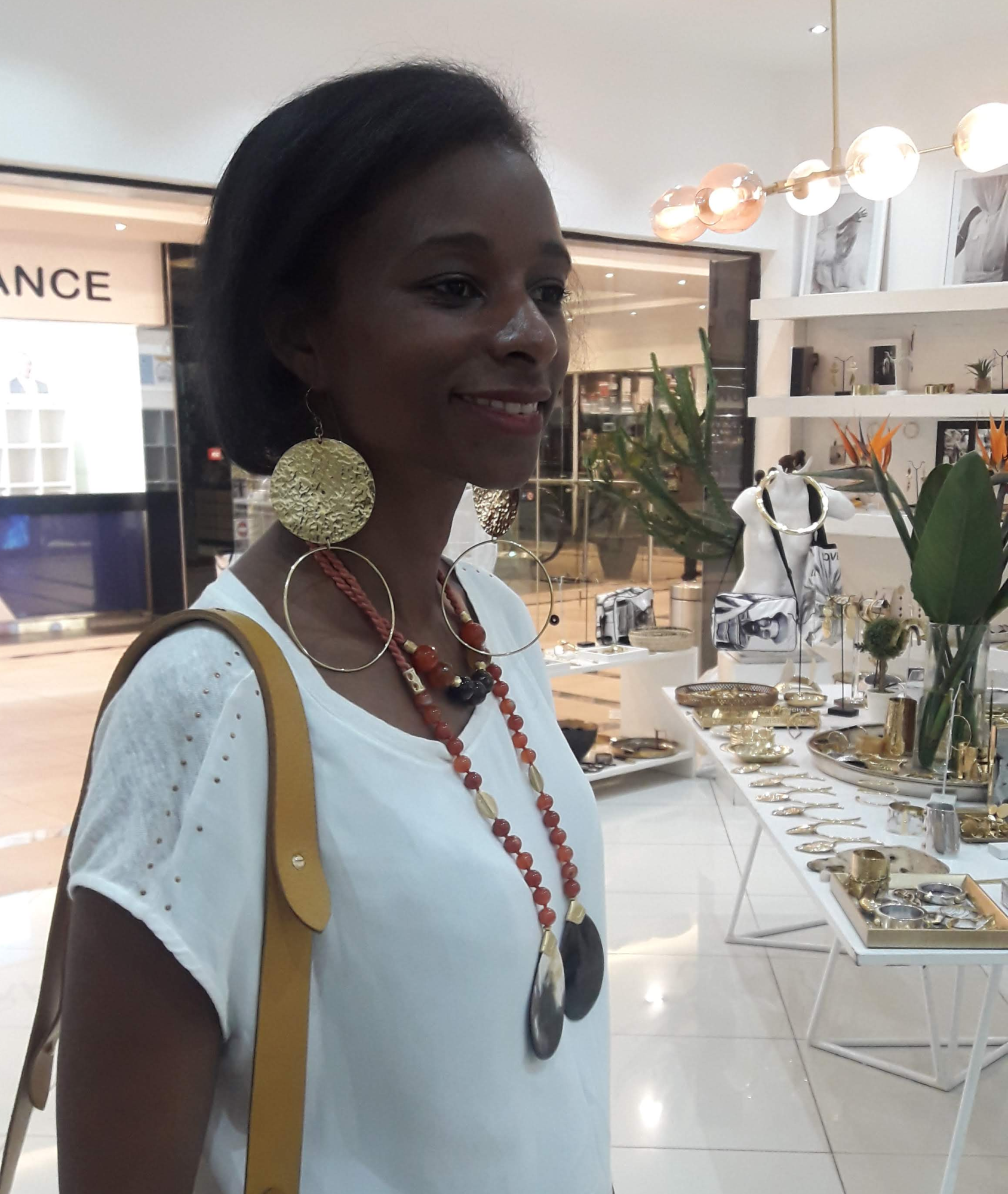
Jewellery by Adele Dejak
As you’ve probably noticed, I’m a huge fan of jewellery: gold, silver, costume jewellery – I love it all! For me, this fashion accessory is an absolute must-have, whatever the occasion.
What jewellery says about us and about me 🙂...
Jewellery, whether precious or costume, says a lot about us: about our style, our personality and even our memories. It is not merely a fashion accessory. It can be a sign of religious, ethnic or community affiliation. Jewellery also reveals our marital status through the wedding ring. For me, my jewellery is part of my personal history. For example, the pieces given to me by my parents at key stages of my life, or the sets I received from my aunts as wedding gifts.
I love the idea that they carry a story with such strong sentimental value. I really enjoy mixing and matching: the cheap with the chic; the classic with the whimsical, sprinkled with ethnic touches. Jewellery expresses my tastes and moods; it helps complete my outfit, but above all, I see it as a symbol of elegance and femininity! 
A story of tradition...
African jewellery is often described as ethnic jewellery because it reflects the cultural and artistic heritage of this part of the world. These creations are imbued with the characteristics and symbolism of different ethnic groups and bear witness to a craftsmanship passed down from generation to generation. Beyond its aesthetic appeal, jewellery has always been a part of African civilisation, regardless of the country or ethnic group. It sometimes indicated social status and served as a form of currency. Thus, jewellery among the Maasai of Kenya acts as a social marker: the beads, colours and shapes define whether or not one belongs to a tribe. They are also silent narrators of stories and codes to be followed.
Among the women of the Fulani ethnic group, a nomadic people found in some fifteen West African countries, Fulani earrings hold significant traditional meaning. In the past, they were made of gold and served as a dowry at weddings. They thus symbolised social status and wealth. Tuareg jewellery tells the story of this Berber people living in the desert. Made mainly of silver, these pieces not only possess strong symbolic value but also serve a protective function. They are even worn as talismans. As with the Maasai and the Fulani, these Tuareg jewels also served as a medium of exchange. Tuareg women did not wear gold jewellery out of superstition.
One of the best-known pieces of jewellery among this people is the Southern Cross, particularly the Agadez Cross, but there are 21 types of cross! They represent a town or an oasis on the route of the nomadic tribes. The design of the jewellery is carried out by women among the Maasai and by men among the Tuaregs. Among the Baoulé and Akan, ethnic groups in Ghana, jewellery plays a central role in cultural tradition, notably featuring the symbols “Sankofa” and “Gye Nyame”.
Sankofa means “return and take”, conveying the idea of learning from the past to build one’s future. “Gye Nyame”, meaning “God alone”, represents a form of spiritual protection. Traditional ethnic jewellery is handcrafted and passed down from generation to generation, such as Tuareg jewellery (see article: Conversation with Mohamed Elmaouloud Hamid, Tuareg craftsman).
(1) Masai ©bijouxchérie.com; (2) Fulani; (3) Southern Cross ©shop-tuareg; (4) Akan and Baoulé jewellery ©Kaolack créations
Ethnic jewellery today…
Today, a new generation of designers is emerging with a strong commitment to sustainability and social responsibility. These designers draw inspiration from rich traditions to create contemporary pieces. These stunning items subtly blend traditional techniques and motifs with modern designs. This jewellery adds a touch of character to our outfits: a captivating necklace over a simple T-shirt, a chunky, statement ring, or earrings and bracelets made from wax print and cowrie shells are all you need to look stunning!
I am particularly drawn to the fact that this jewellery is entirely handmade by women, using local materials: beads, glass paste, bronze, leather, ebony, wax print, and stone, as is the case with the Toubab Paris brand (see article: the timeless elegance of Toubab Paris jewellery). Drawing on ancestral craftsmanship and using pure or even recycled materials to create modern jewellery is a principle I wholeheartedly support. It represents a significant form of commitment.
Toubab Paris DIin