Timeless African art:
Tuareg jewellery
Could you introduce yourself?
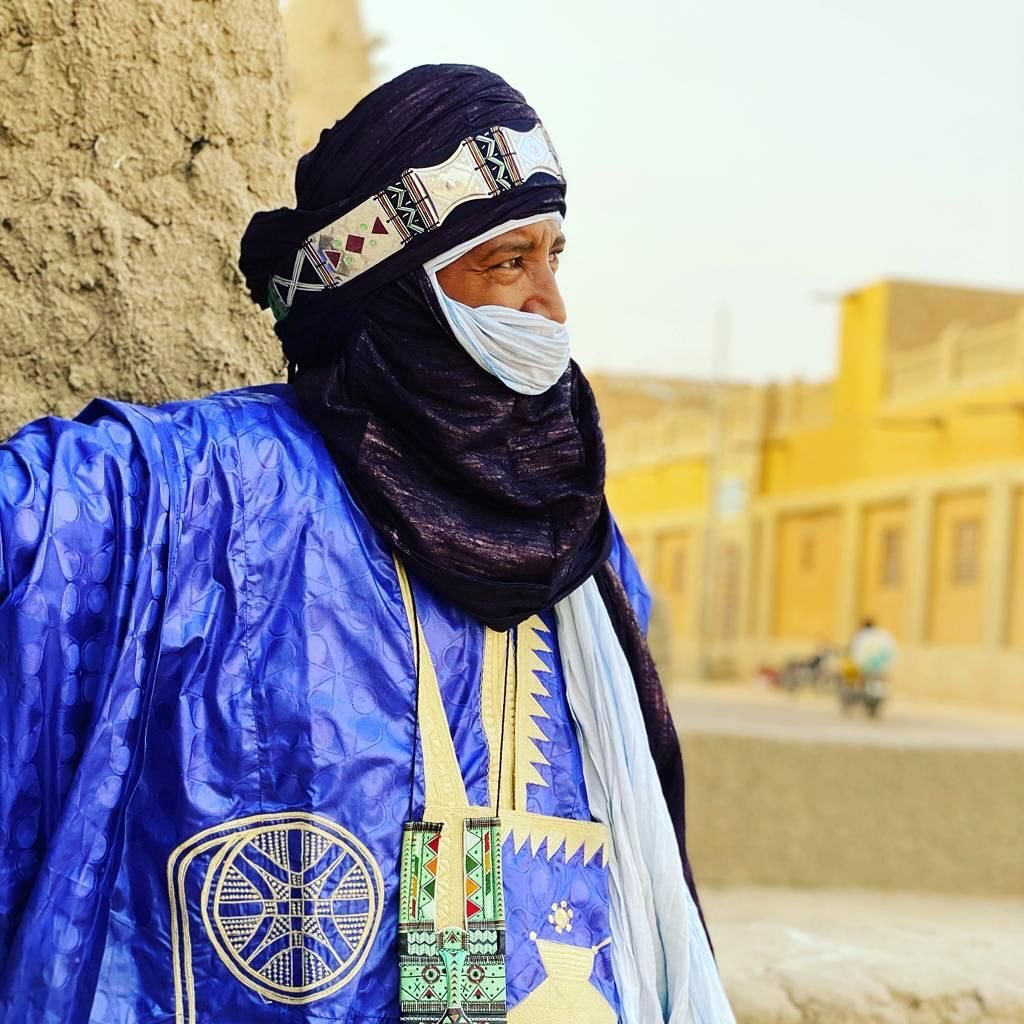
My name is Mohamed Elmaouloud Ag Hamid, and I am a craftsman from Timbuktu, Mali. I am the seventh generation to practise this precious craft, which has been passed down from father to son for generations. My craftsmanship is rooted in the rich cultural tradition of Timbuktu, a city famous for its history, cultural diversity and traditional crafts. My artisanal heritage was passed down to me with passion and dedication by my father, who himself received it from his father, and so on, going back generation after generation. As an artisan, I strive to preserve and perpetuate the traditional craft techniques for which our city is renowned.
My work spans a variety of fields, ranging from pottery to jewellery making. Each of my creations reflects the richness of our culture and the expertise acquired over generations. I take great pride in creating unique and authentic pieces that tell a story and capture the soul of Timbuktu. As a seventh-generation artisan in my family line, I am proud to carry on this tradition and help preserve our country’s cultural heritage. My aim is to share our history and art with the world whilst continuing to create exceptional works of art that celebrate our rich heritage.
What is the role of your association: Timidwa?
Timidwa means ‘Friendship’ in the Tamachek language. Founded in 1997, the Timidwa association has established itself as a hub for artistic expression and a gathering place for over 150 passionate artisans from a variety of trades. Our collective draws its strength from creativity, cultural diversity and a commitment to positive change within our communities, as well as the fight against unemployment and poverty. 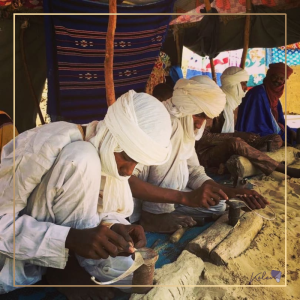
How do you work?
In my work as a craftsman, I draw on a range of traditional techniques passed down from generation to generation. These techniques are at the very heart of my craft, and they are essential for creating authentic handcrafted pieces steeped in the history of our people. I am committed to preserving tradition by always using the same symbols and motifs that have been passed down to me. They are imbued with deep meanings and tell a multitude of stories that are dear to my heart. The symbols and motifs I incorporate into my creations reflect our local culture, our history and our connection with nature.
How important is your craft to Tuareg culture?
My craft is of considerable importance in Tuareg culture. We artisans are the guardians of our community’s cultural and artistic heritage. Here is why our craft is essential to Tuareg culture:
- Preservation of cultural identity: Tuareg craftsmanship is deeply rooted in our history and our identity as a nomadic people. By preserving and passing on traditional techniques and motifs, we safeguard the essential elements of our culture and way of life. It is a unique form of artistic expression that allows us to tell stories, celebrate our natural environment, and share our beliefs and values. Every handcrafted piece we create is a work of art steeped in symbolism.
- It plays a crucial role in the local economy by creating employment opportunities within our community. It also helps to promote cultural tourism by attracting visitors interested in our unique creations.
Tuareg craftsmanship is often recognised internationally for its quality and authenticity. It serves as a cultural bridge, fostering cultural exchange and understanding between our community and the rest of the world. In short, our craft as Tuareg artisans is much more than just a profession. It is the guardian of our history, our values and our cultural identity. We are the custodians of the key that unlocks the door to our rich heritage, and our work is a living testament to the beauty and diversity of Tuareg culture. 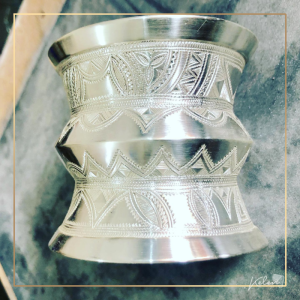
How did you learn this craft?
I learnt this art in the traditional way, always working alongside my father. From a very young age, I was fortunate enough to observe and learn from him, as he was himself a seasoned craftsman in our community. My father guided me with patience and dedication, passing on not only the practical skills required for this craft, but also the deep cultural and symbolic meaning behind each creation. Every gesture, every technique, every pattern or symbol had a story and a special meaning, and my father taught me to understand them and incorporate them into my work.
I was fortunate to work alongside him, to ask questions, to practise under his supervision and to absorb his wisdom over the years. This intergenerational learning process was both a passing on of skills and a cultural legacy. It was a way of honouring our community’s traditions and ensuring that Tuareg craftsmanship is passed down from generation to generation. Thus, my craft has become much more than just a profession; it has become a link between the past, present and future of our culture and our craftsmanship.
What challenges do you face as a craftsman?
The challenges we face as artisans are the security challenges in our regions. The workshop to be held in Dubai will be a session in which we will give a presentation on this art form and its history. The workshops will enable participants to make their own jewellery using traditional methods and techniques.