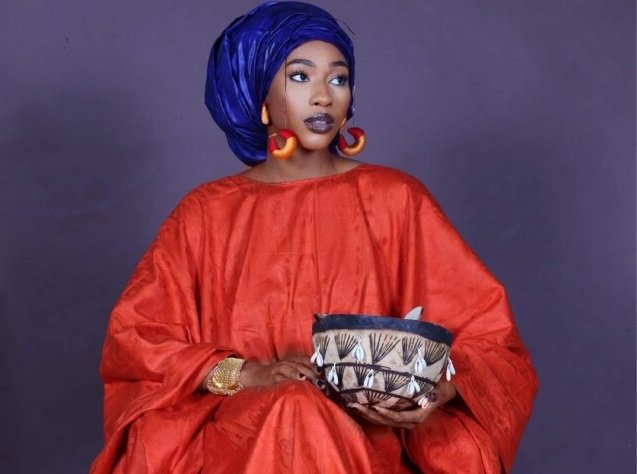
During my trips to Senegal, I am always struck by the elegance of the women of Dakar. In this article, we’ll explore the headscarf, a heritage item with many meanings, an accessory that hides much more than just beautiful hair...
The moussor, a precious heritage...
In the world of Senegalese women’s fashion, the moussor, or headscarf, is an essential, even indispensable, accessory. This piece of fabric lies at the heart of African cultural identity, constituting a true heritage: known as ‘Moussoro’ in Mali, ‘Gele’ in Nigeria, ‘fichu’ or ‘Maré de tête’ in the islands, ‘Duku’ in Malawi and Ghana, “Dhuku” in Zimbabwe, “Tukwi” in Botswana, “Gele” among the Yoruba, “Ichafu” among the Igbo, “Kouna Diala” among the Bambara (the headband that wraps around the head), “Tabla” among the Fon in Benin, “Gnoubouholo” among the Senoufo, “K’sa” among the Tuareg.
The use of the headscarf has its roots in pre-colonial times and, depending on the country and ethnic group, it held a particular significance. Sociologist Faco Diarra points out that in Mali, the headscarf was seen as a means of divine protection. Nowadays, still in Mali, the “Demba diala” is an iconic and unique headscarf, worn specifically by members of the in-laws’ family during wedding celebrations. The patterns vary by ethnic group, with names such as Moussoro or Missoro for the Bambara and Fulani, Gnoubouholo among the Senufo, K’sa for the Tuareg, and Bissoro or Yipanado among the Soninke.
Wearing a headscarf is also a widespread tradition in many cultures during important events such as weddings, as this accessory is seen as a symbol of femininity. Historically, among the Yoruba peoples of West Africa (Nigeria, Benin, Togo, Ghana), there were various types of headscarves, the way in which they were tied indicating the wearer’s social status. For example, if the end of the headscarf pointed to the right, it meant the woman was married, and if the tip was on the left, it indicated she was single and open to courtship.
In the United States, during the colonial era, the wearing of a headscarf was compulsory for Black and mixed-race women in Louisiana under the Tignon Act (derived from the luxury laws), turning it into a symbol of submission. This measure was intended to conceal their elegance – often expressed through braids adorned with beads – and to emphasise their inferior status compared to white women. The Creoles quickly transformed the symbolism of this headband, turning it into a symbol of beauty through the creation of spectacular headdresses, now famous as maré tèt (Madras turban, in Creole).
The moussor, elegance reinvented...
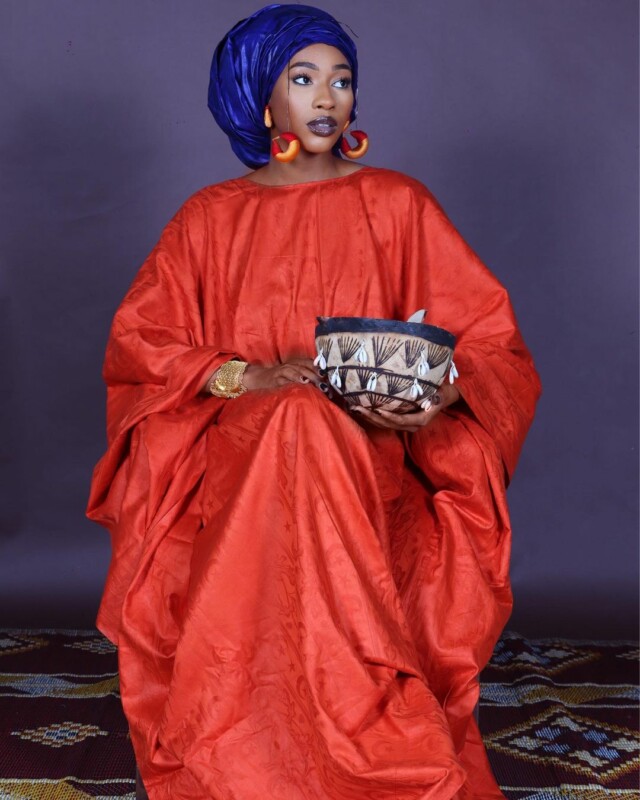
Successively seen as a sign of submission and then of resistance, the headscarf is now worn by everyone, illustrating the growing integration of African fashion into the global scene. This trend, known as ‘turbanistas’, refers to the community of ultra-connected women of African descent, proud of their African roots! Today, wearing a headscarf goes just as well with traditional clothing as it does with jeans and a T-shirt. There are also plenty of workshops and tutorials on how to tie headscarves.
I particularly love this touch, which enhances the silhouette and gives women a regal air, like a crown. Women such as Awa Seck, founder of “Les Moussors de Awa”, aim to elevate this simple piece of fabric into an everyday fashion accessory. The widespread adoption of this headwear beyond African borders has been partly thanks to iconic figures of natural Black beauty, such as the Mexican-Kenyan Lupita Nyong’o and the African-American Alicia Keys. 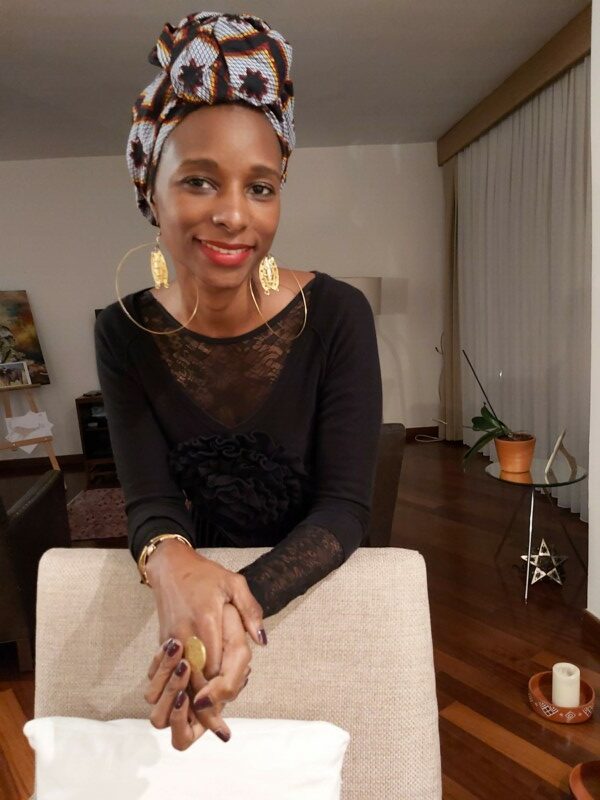
The moussor in art...
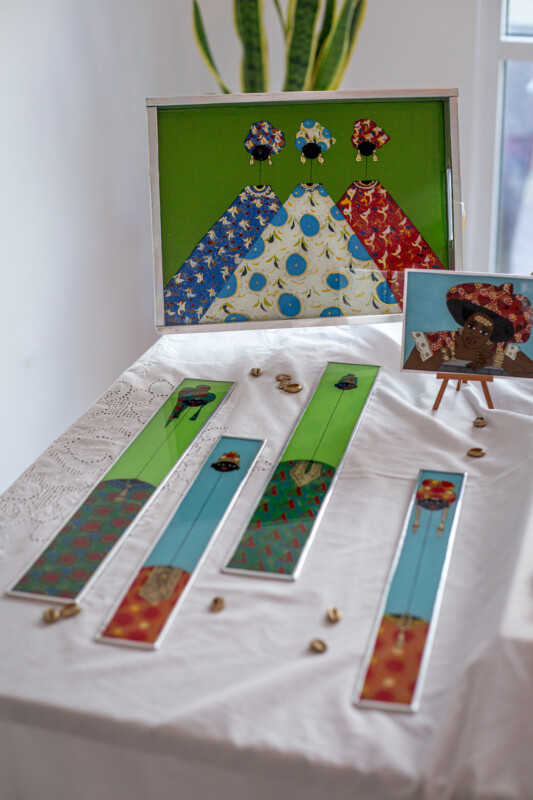
This grace and femininity captivate artists from diverse backgrounds, such as the painter Ibrahima Gningue, who delights in depicting dazzling women, or the sculptor Boureima Ouédraogo, known for his statuettes of elegant women. These elements are also found in craftsmanship, such as the highly prized trays by Boubacar Konaté or the coasters by Mamoune Gueye, where women are always beautifully dressed in their colourful boubous and, naturally, their moussors.